Deck Railing Options, Heights, Materials, and Safety for Triangle Homeowners
Deck railing options, heights, materials, and safety for Triangle homeowners
When homeowners in Raleigh, Cary, or Apex start thinking about a new deck or fixing an older one, the railing quickly becomes a central topic. It has to meet local code, keep everyone safe, handle our humid Piedmont weather, and still look good with the house and yard. Getting these details right early prevents headaches later, whether you are planning new deck construction or considering a full rebuild.
Over the years we have seen plenty of older decks across Wake, Durham, and Orange Counties where the railings were the first thing to show wear or fail inspection. The good news is that today’s options give you real choices that balance safety, maintenance, and style. This article breaks down what Triangle homeowners need to know so you can make informed decisions before calling a deck builder.
What Triangle building codes actually require for deck railings
North Carolina follows the 2018 Residential Code for most deck requirements, and municipalities in the Triangle generally enforce it. If your deck surface sits more than 30 inches above grade, you need a guardrail. The top rail must measure at least 36 inches high measured from the deck floor. Balusters or any infill cannot allow a 4-inch sphere to pass through anywhere along the railing, including the gap from the bottom rail to the deck surface. On stairs the triangular gap formed by riser, tread, and bottom rail cannot exceed 6 inches.
Posts typically cannot exceed 8 feet on center, and the entire system has to resist specific loads: 200 pounds concentrated force or 50 pounds per square foot on the infill. Some local inspectors, especially on higher decks or in certain neighborhoods, may require 42-inch rail height. Raleigh, for example, requires a permit for most attached or elevated decks, and those plans must show railing details clearly. Always check with your specific town or county before buying materials. What passes in one jurisdiction may need slight changes in another.
Sloped yards common throughout the Triangle add another layer. A deck that follows a downhill grade may need railings on multiple sides or even intermediate landings. Footings still must reach below the frost line, usually 12 inches minimum in our clay soils. These details matter because a railing that looks fine on flat ground can feel entirely different on a Wake Forest or Chapel Hill hillside.
Common safety issues we see on existing Triangle decks
Many homes built before the tighter codes of the last 15 years have railings that no longer meet today’s standards. The most frequent problems we find during assessments are loose fasteners, rotted wood posts or top rails, and baluster spacing that exceeds 4 inches. Nails instead of bolts or screws often work loose over time, especially where wind or foot traffic creates movement.
Another frequent issue is inadequate post attachment to the deck framing. A wobbly railing is more than an annoyance. It can fail when someone leans against it. In our experience, railings are often the weak link on older decks even when the floor itself remains solid. Humid summers and occasional freeze-thaw cycles accelerate rot in untreated wood and loosen connections.
Homeowners sometimes ask us whether their 20-year-old railing is still safe. The honest answer requires a close look. If you see cracks, soft spots, rust on fasteners, or gaps larger than allowed, it is time to plan repairs or replacement. We always recommend a professional inspection before deciding between a targeted railing upgrade and a complete deck rebuild.
Comparing deck railing materials for North Carolina climate
Wood remains the lowest first-cost option. Pressure-treated pine or cedar can look great initially and matches many existing houses across the Triangle. The downside is maintenance. In our humid summers you will likely need to stain or seal every one to two years to fight mildew, checking for rot around post bases and where fasteners penetrate. Many Cary and Holly Springs homeowners eventually tire of the upkeep and switch to lower-maintenance materials.
Composite railings pair a composite top rail and balusters with hidden aluminum reinforcing inside. They cost more upfront but eliminate most sanding, staining, and painting. The material handles moisture well and resists fading when manufactured with good UV inhibitors. We often recommend composite for busy families who want the look of wood without the annual work.
Aluminum systems have grown popular in Raleigh suburbs. Powder-coated aluminum posts, rails, and balusters resist corrosion in our climate and need almost no maintenance beyond occasional cleaning. Prices typically run $50 to $100 per linear foot installed, depending on style and height. The clean lines work especially well on modern homes in Morrisville or Durham.
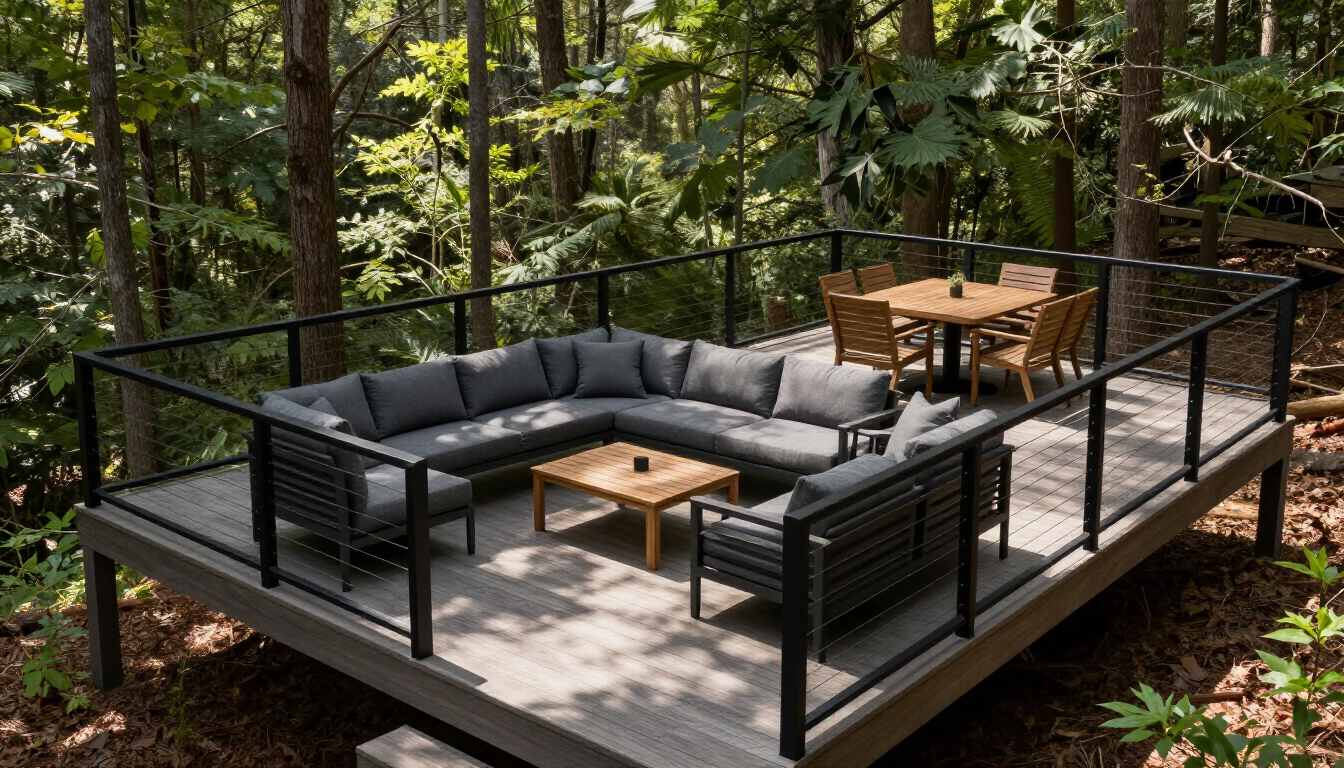
Cable railing delivers a contemporary, unobstructed view that many homeowners love on higher decks overlooking wooded lots in Apex or Rolesville. Stainless steel cables stay taut if installed correctly and resist rust. However, cable is one of the more expensive options and some HOAs in planned communities around Cary and Wake Forest prohibit it. Glass panels offer similar views but require regular cleaning and come at a premium price.
The practical choice usually comes down to budget, desired maintenance level, and how the deck fits your yard. A sloped site in Chapel Hill may favor a material that handles differential movement without cracking. A sunny deck in Garner may push you toward fade-resistant aluminum or composite. We walk through these tradeoffs on every site visit.
Layout and design considerations that actually matter
Good railing design starts with how you use the deck, not with a catalog page. Traffic flow from the house doors, seating zones, grill placement, and views all influence railing placement and style. On sloped lots common throughout the Triangle, multi-level decks often make more sense than one giant platform with tall railings. Shorter runs of railing on separate levels can feel less confining and may reduce material costs.
Privacy needs vary. Some families want solid panels or spaced balusters that block neighbor sightlines while still allowing breeze. Others prefer open cable or slender aluminum balusters to keep long views of the yard. Frosted glass or decorative infill panels can solve privacy without making the space feel closed in.
Stairs deserve equal attention. Consistent handrails at the correct height, proper baluster spacing on the open side, and grippy stair treads prevent trips. We frequently rebuild stairs and railings together because the two systems work as one unit.
Integrating railings early in the planning phase prevents expensive changes later. That is why we spend time walking the yard, noting doors, grade changes, and sun patterns before drawing a single line. The result is a deck that feels like it belongs on your specific property instead of a generic template dropped onto the lot.
Typical costs for railing upgrades or replacements in the Triangle
Replacing or adding railings generally adds between $35 and $210 per linear foot depending on material and complexity. A basic pressure-treated wood railing might land on the lower end while cable or glass systems push toward the higher figures. For a typical 12 by 16 foot deck you could expect total railing costs from roughly $900 to $1,800 on a replacement project, but every site is different.
Factors that move the number include post spacing, need for additional bracing on tall decks, stair railings, and any custom work to match existing architecture. Removing old rotten posts that were poorly attached can add labor time. We provide clear written estimates that break these items out so homeowners in Fuquay-Varina, Knightdale, or anywhere else in our service area understand exactly what they are paying for.
Many clients find that investing in quality railings during a deck rebuild pays off in reduced maintenance and higher resale appeal. A code-compliant, sturdy railing is one of the first things a home inspector checks.
Questions we hear most often during consultations
Homeowners regularly ask about permit requirements, whether they can keep existing posts, and which materials hold up best here. Another frequent question is whether cable railing will pass their HOA review. The answer varies by neighborhood, so we suggest pulling your covenants early.
Parents often want to know about child safety. The 4-inch sphere rule exists for exactly that reason. We also get questions about lighting integration and whether railings can incorporate planters or seating. These details are worth discussing because they affect both function and final cost.
When to repair, upgrade, or replace your entire deck
Not every worn railing requires tearing out the whole deck. If the framing remains solid and only the railing shows rot or code problems, a targeted replacement can make sense. However, if you find widespread decay, outdated ledger attachments, or multiple safety issues, a full rebuild often proves smarter in the long run.
Our approach is always the same. We assess the entire structure honestly and recommend the option that best fits your budget, timeline, and goals. Sometimes that means practical upgrades such as new railings, stairs, and skirting without touching the main floor. Other times the best value is a complete new deck built to current standards.
Either way, the goal stays consistent: a safe, durable outdoor space that works with your yard, your lifestyle, and the realities of North Carolina weather.
Next steps for Triangle homeowners
Choosing the right deck railing involves more than picking a style you like on a website. Local code, site conditions, long-term maintenance, and how the deck will actually be used all matter. The best way to sort through those variables is a conversation on your property with someone who builds decks throughout the Triangle every week.
If you have an older deck you are unsure about or you are planning a new one and want to get the railings right from the start, we are happy to help. We will walk the site, discuss realistic options, answer your questions about code and materials, and give you a clear written estimate. No pressure, no upselling features you do not need.
Request a free on-site assessment today. Whether you are in Raleigh, Cary, Apex, Wake Forest, Durham, Chapel Hill or anywhere else we serve, we will give you straightforward guidance so you can move forward with confidence.
In the meantime, you may also want to read our articles on new deck construction , deck rebuilds and replacements , and practical upgrades including railings, stairs, and skirting.
Recent Posts