Deck permits and inspections in the Triangle: what homeowners should actually expect
Deck permits and inspections in the Triangle: what homeowners should actually expect
If you are getting estimates for a new deck or a full rebuild, the permitting question almost always comes up. Do you need one? Who pulls it? How long does it take? Will it slow the project down? And what happens if a builder offers to skip it to save you money?
These are fair questions, and the answers matter. Permitting and inspections are not paperwork for the sake of paperwork. They are how your town confirms that the structure you are about to spend real money on is safe, properly attached, and built to current code. They also protect you later, when you sell the home or file an insurance claim.
Here is what homeowners across Raleigh, Cary, Apex, Durham, Chapel Hill, Wake Forest, Holly Springs, Fuquay-Varina, Hillsborough, and the rest of the Triangle should expect, in plain terms.
Do you actually need a permit for a deck?
In most cases, yes. The rules vary by municipality, but a few common triggers show up almost everywhere:
- The deck is attached to the house with a ledger board
- The walking surface sits more than 30 inches above grade
- The deck is over a certain square footage
Raleigh is one of the stricter jurisdictions. Since 2020, the city generally requires permits for residential decks regardless of size, attached or freestanding. Cary takes a similar approach. Durham allows more flexibility for very small, low, freestanding platforms, but anything attached to the house or elevated still needs review. Wake Forest, Holly Springs, Apex, Chapel Hill, Fuquay-Varina, and Hillsborough each enforce the North Carolina Residential Code locally, with their own submittal processes.
Two important takeaways. First, do not assume what was true for your neighbor or what was true ten years ago is still true today. Second, if a contractor tells you no permit is needed without checking your specific town, that is a flag worth noticing.
Who pulls the permit, you or the contractor?
For a licensed deck builder, pulling the permit is standard. The builder submits drawings, structural details, and site information to the local building department, pays the fee, and includes that cost in the estimate. The permit is then in the contractor’s name, which means the contractor is on the hook for the work passing inspection.
Homeowners can pull their own permit in North Carolina if they are acting as their own contractor. In Raleigh that requires signing an Owner Exemption Affidavit. It is legal, but it shifts responsibility for code compliance onto you. For most people hiring a builder, the cleaner path is having the contractor handle it.
If a builder asks you to pull the permit yourself for a job they are building, ask why. Sometimes there is a reasonable answer. Often it is a sign the builder is not licensed at the level the project requires, or wants to avoid liability if the work fails inspection.
How long does permitting take in the Triangle?
This varies by town, by season, and by how complete the application is when it goes in. Approximate ranges based on local building department information:
- Raleigh: roughly 15 business days for initial review, sometimes longer in busy periods
- Cary: typically 15 to 20 days
- Durham: often 10 to 15 days for standard residential
- Smaller towns like Wake Forest, Holly Springs, Apex, and Hillsborough: usually 10 to 30 days
Spring is the busy season across the Triangle. If you are submitting in March or April, expect the longer end of the range. A complete, well-documented application moves faster than one that comes back with corrections. This is one of the practical advantages of working with a builder who has submitted plans in your specific jurisdiction before.
Plan for at least two to four weeks between signing a contract and breaking ground. Sometimes it is faster. Sometimes it is longer. Any builder who promises a hard date before the permit is issued is guessing.
What inspections will happen during the build?
For a typical residential deck, you can expect three main inspection points:
Footings
Before any concrete is poured, the inspector checks that the footing holes are dug to the required depth and diameter for the soil and frost line. In our region that usually means at least 12 inches below grade, with diameter sized to the post load. If a builder pours footings before this inspection, that work may have to be dug back up.
Framing
Once the structure is framed but before decking goes down, the inspector looks at the ledger attachment, joist hangers, beam connections, post bases, and bracing. For attached decks, the ledger is the single most important connection on the entire build. This is where a lot of older Triangle decks fail, and why inspectors look closely.
Final
After the deck surface, railings, and stairs are complete, the final inspection confirms guardrail height, baluster spacing, stair geometry, and overall code compliance. North Carolina code generally requires guardrails 36 inches tall on any deck more than 30 inches above grade, with balusters spaced so a 4 inch sphere cannot pass through.
A good builder schedules these inspections, meets the inspector on site when needed, and adjusts work if the inspector flags something. None of this should be a surprise to the homeowner.
How permitting shapes design choices
Permitting is not just a timeline issue. It also affects what gets built. A few examples:
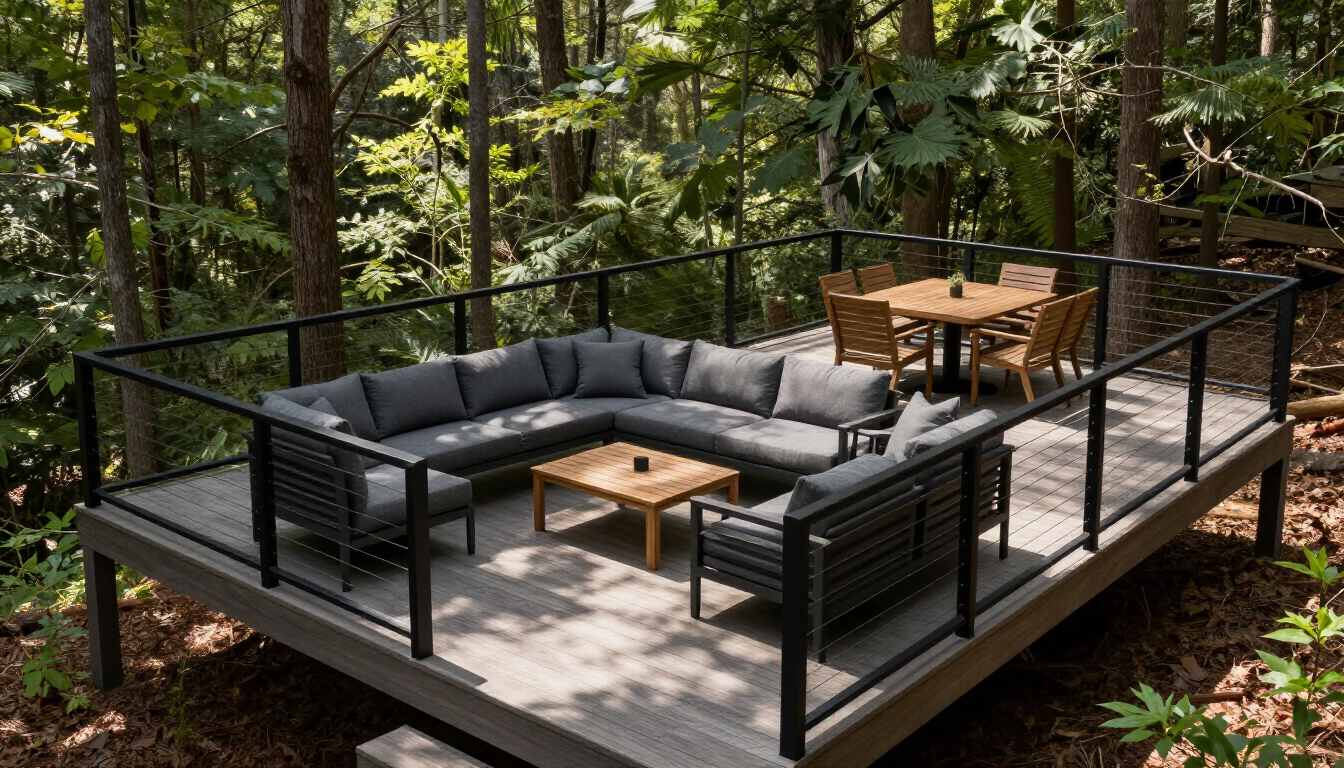
- Railing height and baluster spacing are dictated by code, not by preference. If you want a more open look, options like cable rail or thin metal balusters can deliver that within code.
- Stair rise and run have to fall within specific ranges. A builder cannot just make stairs more comfortable by eyeballing them.
- Ledger attachment for an attached deck requires lag bolts or structural screws in a specific pattern, with flashing to prevent water damage to the house framing.
- Footing depth and post sizing are based on load calculations, not on what looks beefy enough.
This is one reason we spend real time on planning before a contract is signed. Designing a deck around your yard, doors, grade, and how you will actually use the space, while staying inside code, is the part that separates a good build from a problem you live with for years. You can see how we approach that on our new deck construction page.
HOA approval is separate from a permit
If you live in an HOA neighborhood, which covers a large share of homes in Cary, Apex, Morrisville, Holly Springs, Wake Forest, and parts of Raleigh and Durham, you likely need architectural review board approval in addition to your municipal permit. The HOA cares about appearance, materials, color, and neighborhood standards. The town cares about safety and code.
One does not replace the other. HOA approval can take a few weeks on its own, and some boards only meet monthly. Start that process early, ideally at the same time as the permit application.
What happens if a deck is built without a permit?
Three real risks come up most often:
- Resale. North Carolina requires sellers to disclose known unpermitted work. Buyers and their agents often demand it be permitted retroactively or removed before closing. Retroactive permitting may require opening up structure for inspection, which is expensive.
- Insurance. If someone is injured on an unpermitted deck, or if the deck collapses and damages the house, your insurer may deny the claim. Policies vary, but this is a real exposure.
- Enforcement. A neighbor complaint or a routine drive-by can trigger a stop work order, fines, or a requirement to remove the structure.
None of this is meant to scare anyone. It is just the honest picture. The cost of doing it right the first time is almost always lower than the cost of fixing it later.
What about rebuilding an older deck?
If your existing deck was built decades ago, there is a reasonable chance it was either unpermitted or built to code that has since changed. A full rebuild generally requires a new permit, and the new structure has to meet current code regardless of what was there before. That sometimes means deeper footings, a different ledger detail, or different railing geometry than the original.
This is also a good moment to think about whether you are repairing what is there or starting over. We have a separate piece on that decision, and our deck rebuild and renovation page walks through how we approach replacement projects, including how the existing footprint affects what is possible.
What to ask a deck builder about permitting
Before you sign a contract, a few direct questions tell you a lot about the contractor:
- Will you pull the permit in your name, and is the cost included in the estimate?
- Have you submitted plans in my specific town before?
- What inspections will my project require, and who schedules them?
- If something fails inspection, who is responsible for the corrections?
- Can I see the written estimate broken out by labor, materials, and permit fees?
Clear answers to these questions are a strong signal. Vague answers, or pressure to skip the permit, are a signal to keep looking.
Frequently asked questions
Do I need a permit for a small ground-level deck?
Sometimes no, depending on the town. Durham and a few other jurisdictions exempt very small, low, freestanding platforms. Raleigh and Cary generally do not. Always confirm with your local building department or with a builder who works in your area.
How much does a deck permit cost?
Fees vary by town and project value. For most residential decks across the Triangle, expect a few hundred dollars, sometimes more for larger or more complex builds. A reputable builder includes this in the written estimate.
Can I start building before the permit is issued?
No. Work performed before the permit is issued can result in stop work orders and additional fees, and may have to be exposed for inspection later.
Will the inspector come inside my house?
For a deck inspection, usually not. The inspector typically only needs access to the deck, footings, and ledger area on the exterior of the home.
Does Daedalus Decks handle permitting in every Triangle town?
Yes. We regularly pull permits across Wake, Durham, and Orange counties. You can see the full list on our service areas page.
Talk to a builder who handles this part for you
Permitting and inspections should not be a source of stress for the homeowner. With the right builder, you sign the contract, the permit gets pulled, the inspections get scheduled, and you end up with a deck that is safe, code-compliant, and protected at resale.
If you are planning a new deck or a full rebuild anywhere in the Triangle, we are glad to walk your property, talk through what you want, and put together a clear written estimate that includes permitting handled start to finish. Reach out through our contact page , call 919-523-8516, or email daedalusdeckbuilder@gmail.com to schedule a free on-site consultation.
Recent Posts